Office Workstation FAQ: Answering Common Furniture Questions
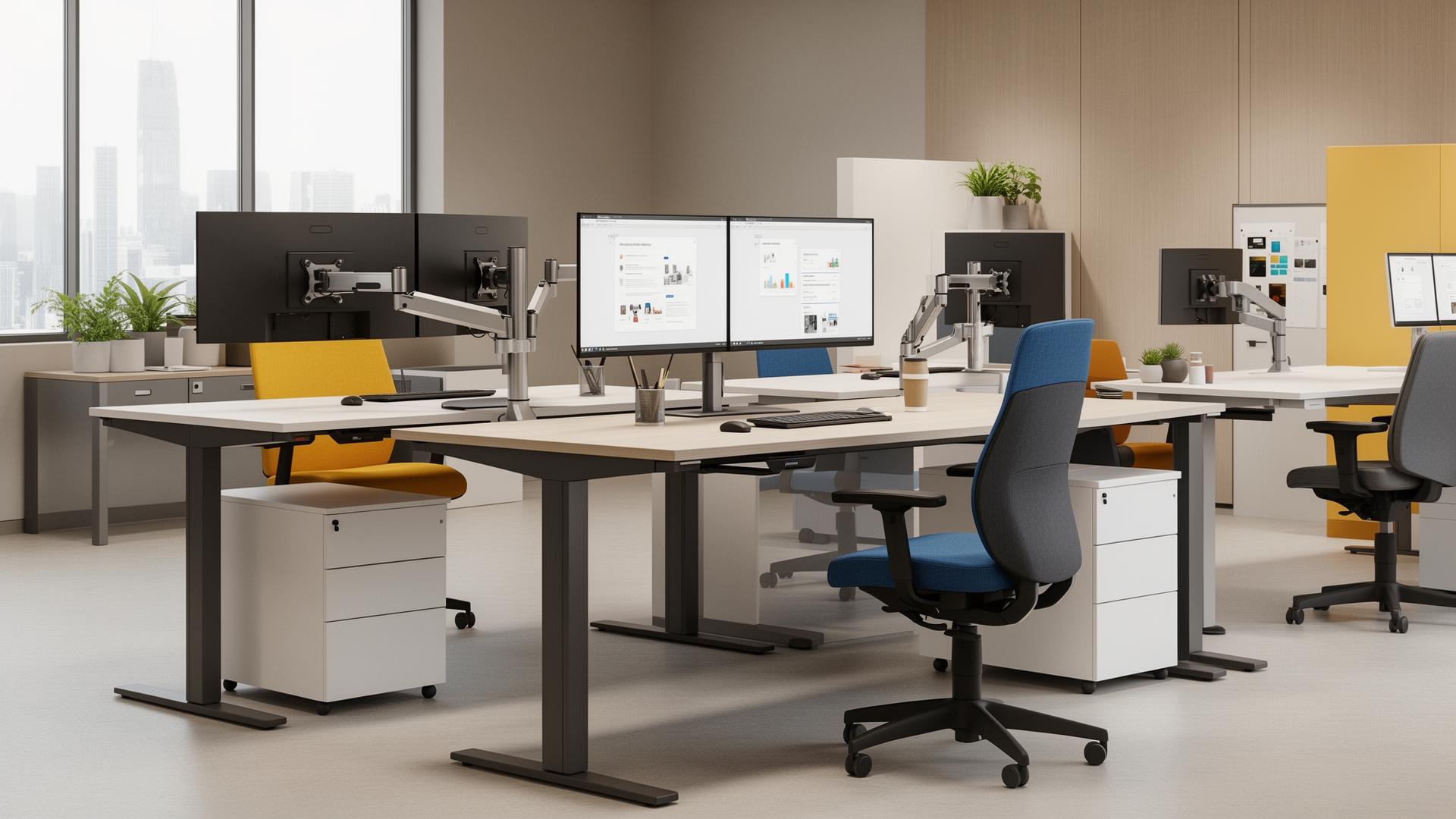
Office workstations are one of the largest furniture investments most organizations make. Getting the selection right impacts everything from employee comfort to space efficiency. Here are answers to the questions we hear most often.
What Size Workstation Do I Need?
Workstation size depends on the work being performed:
- 6x6 feet (36 SF): Suitable for task-focused work with a single monitor. Common for call centers, data entry, and roles with minimal paper handling.
- 6x8 feet (48 SF): The most common standard, accommodating dual monitors, a guest chair, and moderate storage. Works for most office roles.
- 8x8 feet (64 SF): Appropriate for roles requiring extensive paperwork, multiple monitors, or frequent visitor seating. Common for managers and specialized functions.
- Benching (4-5 feet per person): The densest option, using shared surfaces without full panel separation. Works best for collaborative teams in open environments.
Should I Buy New or Used Furniture?
Used furniture can offer 40-60% savings over new. Consider used when:
- Budget constraints are significant
- You need to match existing inventory
- Speed is critical (used furniture is often available immediately)
- Sustainability is a priority (reuse reduces environmental impact)
Quality used furniture from reputable dealers can have years of life remaining. Many manufacturers' systems panels and components are designed for decades of use.
What's the Difference Between Panels and Benching?
Panel systems use fabric-covered partitions to create defined workstation boundaries. They offer acoustic separation, visual privacy, and can incorporate power and data distribution. Panel heights typically range from 42" to 67".
Benching systems use shared work surfaces without full partitions. They're more efficient (more people per square foot), less expensive, and more flexible for reconfiguration. But they offer less privacy and can be noisier.
How Important Is Ergonomics?
Extremely important. Poor ergonomics contributes to musculoskeletal disorders, which account for significant workers' compensation claims and lost productivity. Key ergonomic features include:
- Adjustable chairs: Seat height, back support, and armrests should all be adjustable to fit different body types.
- Proper monitor height: The top of the screen should be at or slightly below eye level. Monitor arms allow precise positioning.
- Keyboard and mouse position: Forearms should be parallel to the floor, with wrists in a neutral position.
- Sit-stand capability: Height-adjustable desks allow alternating between sitting and standing throughout the day.
How Long Does Office Furniture Last?
Furniture lifespan varies by component:
- Systems panels: 15-20+ years with proper care
- Worksurfaces: 15-20 years
- Task chairs: 7-10 years with heavy use
- Guest seating: 10-15 years
- Filing and storage: 20+ years
Quality furniture from major manufacturers is designed for long life and can often be refurbished to extend its useful life further.
What About Standing Desks?
Height-adjustable (sit-stand) desks have become increasingly popular. Benefits include:
- Reduced sedentary time
- Improved energy and focus for some users
- Flexibility to accommodate different work modes
However, standing all day isn't the solution—alternating between sitting and standing is the goal. Electric height adjustment mechanisms are more reliable and easier to use than manual crank systems.
How Do I Choose a Furniture Manufacturer?
Consider these factors:
- Compatibility: If you have existing furniture, new purchases may need to match or integrate.
- Warranty: Major manufacturers offer 10-12 year warranties on most products.
- Service network: Local dealer support for installation, reconfiguration, and service.
- Product breadth: Larger manufacturers offer coordinated solutions across product categories.
- Sustainability: Look for certifications like BIFMA LEVEL, GREENGUARD, and recycled content.
The right workstation selection balances employee needs, organizational requirements, and budget constraints. Taking time to understand your specific situation leads to better decisions.
Need this solved, not just explained?
FSI delivers decision-ready fixed-fee test fits from $5,000, delivered 72 hours after complete inputs and capacity confirmation. Layouts your team and partners can act on.
Need Help With Furniture Planning?
Explore how we help facilities teams make informed furniture decisions.
Explore Facilities Support